
By Mini Fridge 4512
Core Functions of Mini Fridges
Power Consumption and Lifespan
Mini Fridge Application Scenarios
Mini Fridge Energy Consumption Calculation
Solar-Powered: Towards Green, Independent Freshness
The core value lies in creating and maintaining a low-temperature space of 4°C to 10°C. This temperature range effectively suppresses bacteria growth and significantly extends the freshness of perishable items like milk, fruits, vegetables, cooked food, and drinks. It is especially suited for short-term storage of frequently accessed items, preventing waste in large fridges due to forgotten food.
Mini fridges are a model of space efficiency. Unlike bulky home fridges, they use compact cooling systems (often miniature compressors or semiconductor technology). Most models feature a single main cooling compartment. While a few have a small freezer section (usually between -6°C to -12°C) at the top, the design philosophy is to provide the core cooling function with the smallest physical size.
The light weight is a standout feature, making it easy to move within a room, carry during moves, or even place in an RV or car. Thanks to optimized compressor technology or quiet, vibration-free semiconductor systems, these fridges run at low noise levels, typically between 35-45 dB (equivalent to a soft whisper or library environment). This allows for safe placement in bedrooms, study rooms, or offices without disturbing rest or work. It integrates well into spaces that prioritize quiet and convenience.
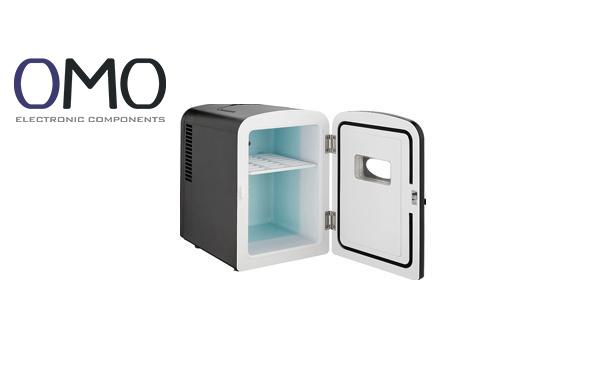
Power (watts, W) measures how quickly a device uses electricity. Mini fridges, due to their compact size, require much less power than traditional fridges. Common compressor-based mini fridges consume between 50W and 100W, while those with semiconductor cooling systems are typically more energy-efficient, using around 40W to 60W.
Because of their small internal space and limited insulation, mini fridges don't run continuously. The typical daily running time is about 8 to 12 hours, depending on environmental temperature, door opening frequency, and set temperature. The formula to calculate daily energy consumption is simple:
Daily Energy Consumption (kWh) = Power (W) × Average Operating Hours (hrs) ÷ 1000
A good-quality mini fridge usually has a lifespan of 5 to 10 years. Models with compressor cooling tend to last longer due to more mature and durable technology compared to semiconductor models of the same level.
| Key Factor | Effect on Lifespan |
| Operating Temperature | High temperatures (>35°C) greatly increase compressor load and internal pressure, shortening the lifespan of core components. Avoid direct sunlight or hot spots. |
| Cooling Conditions | Poor ventilation can hinder heat dissipation, accelerating internal component aging. Leave at least 5-10 cm of space around the fridge for airflow. |
| Door Opening Frequency | Opening the door too frequently causes cold air to escape, forcing the cooling system to work longer and harder, leading to mechanical wear. |
| Voltage Stability | Unstable voltage (especially low voltage) can damage the motor and control circuits, potentially damaging the device. A voltage stabilizer or UPS is recommended for unstable power sources. |
| Cleaning and Maintenance | Dust buildup can block the heat sink, reducing cooling efficiency. Aging or dirty seals can lead to cold air leakage and higher energy consumption. Clean the vents and check seals regularly. |
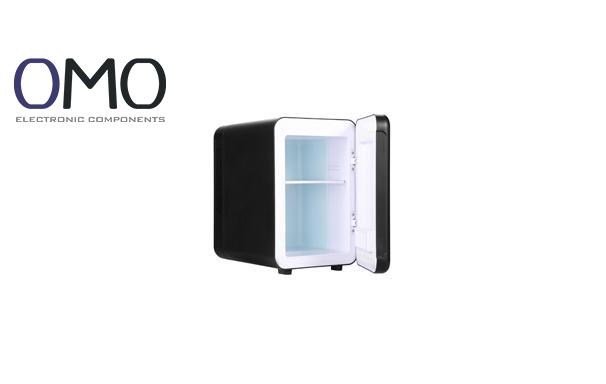
Annual Energy Consumption (kWh) = Power (W) × Average Operating Hours (hrs) × 365 (days) ÷ 1000
Estimated Annual Electricity Cost (Currency) = Annual Energy Consumption (kWh) × Local Electricity Rate (Currency/kWh)
Device: A standard 90W compressor mini fridge.
Daily Operation: In a typical home environment (26°C), it operates about 12 hours per day.
Annual Energy Consumption = 90 (W) × 12 (hrs) × 365 (days) ÷ 1000 ≈ 394.2 kWh
Compared to a standard 300L fridge with an annual energy consumption of around 292 kWh, the mini fridge's annual consumption (394.2 kWh) is slightly higher due to its efficiency and smaller space. However, its per-unit storage cost (including purchase and electricity) is more economical for users who only need small storage space. The mini fridge’s annual energy use is roughly equivalent to a 60W light bulb running for the entire year.
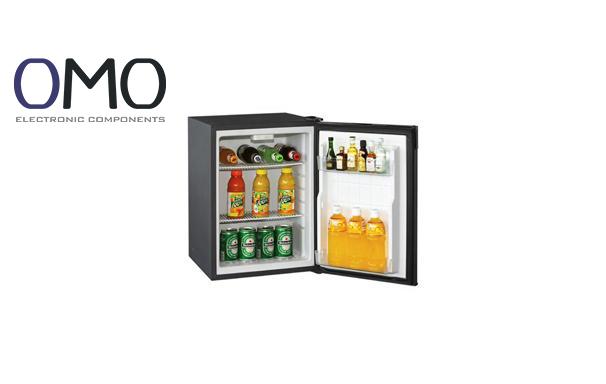
A typical off-grid solar-powered mini fridge system includes:
Storage Battery: Stores collected solar energy (lead-acid or lithium battery), with a recommended capacity of 200Wh or higher for nighttime and cloudy-day power.
For a 90W compressor fridge, consuming about 1.08 kWh per day, a 150W-200W solar panel is recommended (150W * 5 hours = 0.75 kWh; 200W * 5 hours = 1 kWh). Battery storage should handle 1.08 kWh plus additional backup for 1-2 cloudy days.
A mini fridge usually consumes between 50 and 100 watts of power. This varies based on its size, model, energy efficiency, and operating conditions, with some older units potentially hitting 100W or higher.
In homes, electric water heaters and air conditioners are typically the main electricity-consuming culprits. Electric water heaters usually take the top spot, as their high power draw and constant operation make them the biggest energy drain.
Avoid placing mini fridges in direct sunlight, near heat sources, in enclosed or poorly ventilated areas, humid/damp environments, on unstable surfaces, or in extremely cold locations like unheated garages.
While possessing limited capacity and features, mini fridges offer economic viability for some users. Their smaller footprint and reduced energy consumption can translate to savings on both electricity and the initial purchase price. However, their overall value is contingent upon individual requirements, usage habits, and long-term objectives.