AC Symbol on Multimeter: Complete Guide

By Alternating Current Symbol on a Multimeter 8262

AC Symbol on Multimeter: Complete Guide

What is Alternating Current (AC)?

What is Direct Current (DC)?

Common Uses of AC Symbol

Variants or Short Forms of AC Symbol

Types of AC Symbols

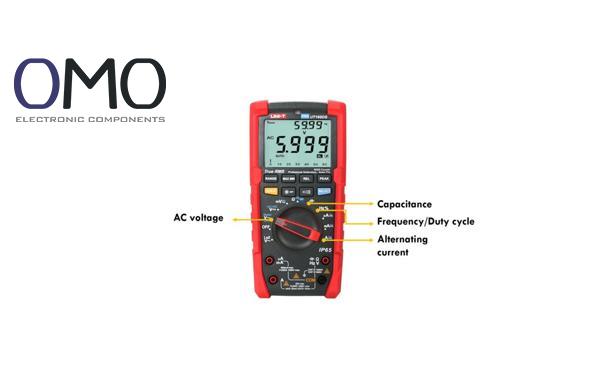
How to Find AC Symbol on Multimeter

How to Use AC Setting on Multimeter

AC and DC Symbols on Multimeter

Practical Use and Tips

Summary and Advice

Frequently Asked Questions


What is Alternating Current (AC)?


Definition


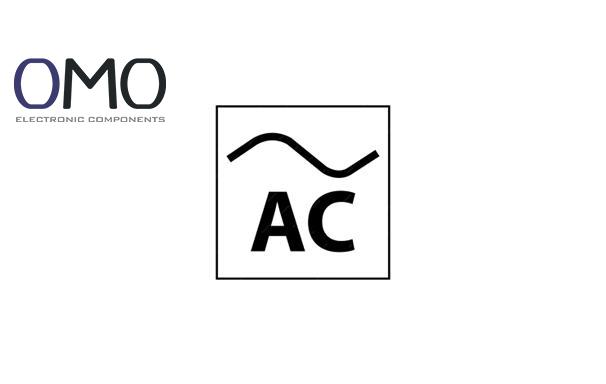
Alternating Current (AC) means current that changes direction and size in cycles with time. The most basic form is sine wave AC, which is the most common type in power grids and home electricity. Unlike Direct Current (DC), AC polarity changes between positive and negative, creating a special waveform.


Features


AC has several clear features:

  • Direction change: The current reverses direction in cycles. This is the main difference from DC.
  • Periodic change: Voltage and current change in sine wave form. They rise from zero to peak, fall back to zero, then change direction and repeat.
  • Easy to transform: A transformer can increase or decrease voltage easily. This allows AC to transmit and distribute power over long distances.
  • Frequency feature: The speed of AC change is called frequency. The unit is Hertz (Hz). For example, in China, grid frequency is 50Hz. That means the direction changes 100 times per second (50 cycles).


Meaning


AC is the core of modern power systems. The electricity we use from wall sockets is AC. Power plants generate electricity, then transformers increase voltage for transmission. After long-distance transfer, transformers reduce voltage to safe levels for homes and industries.
 

What is Direct Current (DC)?


Definition


Direct Current (DC) means current that does not change direction with time. It flows from positive to negative. Thomas Edison promoted it in early power systems.


Features


DC has the following features:

  • Fixed direction: Current flows in one direction only. Polarity does not change.
  • Stable voltage: In ideal case, voltage stays the same. In real case, a battery’s voltage slowly drops as it discharges.
  • Hard to transform: To increase or decrease DC voltage, complex circuits are needed. It is not as simple as AC with a transformer.
  • Common sources: Batteries, solar cells, USB ports, and power adapters (convert AC into DC).


Meaning


DC is the base of modern electronics. Almost all integrated circuits, phones, computers, and TVs need DC to work. We use adapters or chargers to change AC from the grid into DC for devices. With solar power and storage systems growing, DC use is also increasing.
 

Common Uses of AC Symbol


The AC symbol is widely used in electrical fields. It marks parameters, device inputs, and measuring tools. Knowing these uses is important for correct operation.

  • Multimeter: Used to choose AC voltage (V~) or AC current (A~) ranges. Good digital multimeters show clear AC symbols and colors for easy selection.
  • Home appliances: Near the power input, the AC symbol shows the device needs AC supply.
  • Circuit diagrams: Used to show AC power sources, signal sources, or test points.
  • Power sockets: Sometimes marked with AC symbol, showing it provides AC. In some countries, sockets also show rated voltage and frequency.


Variants or Short Forms of AC Symbol


Besides the standard symbol, AC has some common variants:

  • AC: Short for “Alternating Current”. Used in documents and labels.
  • ~ (tilde): A simplified AC symbol, often on multimeters and compact spaces.
  • V~ or A~: Used for AC voltage unit or AC current unit. Very common on measuring tools.

Product Advantage 1: Modern digital multimeters like UT139 series use clear AC symbols and backlight display. Even in dark, users can see correct mode. This reduces wrong operation compared to old analog meters.


Types of AC Symbols


There are two main graphic forms. They mean the same but look a little different.

  • Sinusoidal wave (~): Most common. Shows the sine wave shape. On multimeters, it combines with units, e.g., V~ for AC voltage.
  • V with tilde: A wave mark above or beside “V”. It shows AC voltage range directly.
Symbol Type Common Use Cases Example Devices
~ (wave) Multimeter dial, circuit diagrams, device labels Digital multimeter, electrical schematic
V~ (V with wave) Special meters, voltmeters, power monitoring Power analyzer, voltage monitor


How to Find AC Symbol on Multimeter


  1. Look at dial: The dial has areas like V (voltage), A (current), and Ω (resistance). AC is usually under V or A.
  2. Find ~ or AC under V and A: AC options are usually next to DC options (⎓ or DC). Compare symbols to know.
  3. Common positions:V~ = AC voltage range (for sockets, power sources)A~ = AC current range (some meters have special input for current)
  4. Color help: Some meters use one color (like yellow) for all AC ranges. This makes selection faster.


How to Use AC Setting on Multimeter


Measure AC Voltage (for example, home socket)


Steps for safe and correct use:

  1. Safety first: Check probes are good. Insulation is not broken. Choose correct range. Avoid overload.
  2. Select range: Turn dial to V~. If unsure about voltage, start with highest range (600V or 750V). Then adjust down.
  3. Insert probes: Black probe to COM hole. Red probe to VΩHz hole. Push deep for good contact.
  4. Connect circuit: Touch socket’s two holes (live and neutral) with probes. Keep hands dry. Do not touch metal part.
  5. Read value: Screen shows AC voltage (usually RMS value). When stable, record result.


Notes


  • Never measure voltage in A~ range. It can blow fuse or cause danger.
  • Be careful when measuring high voltage. Do not touch probe metal.
  • If voltage range is unknown, always start with max range.
  • Check probes often. Replace damaged probes.


Product Advantage 2: Good multimeters like UNI-T series use double protection (ceramic fuse + explosion-proof resistor). If user wrongly measures voltage in current range, the circuit cuts off in milliseconds. This prevents damage and injury. Safer than old single protection design.
 

AC and DC Symbols on Multimeter


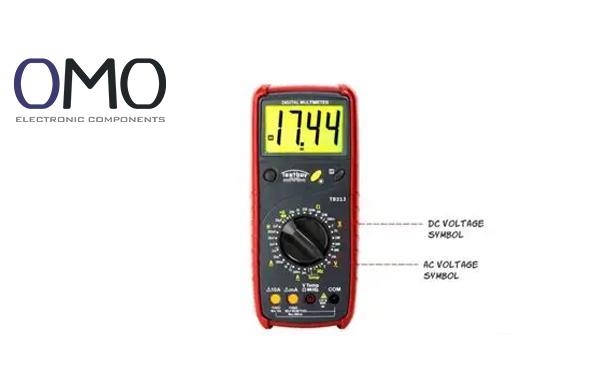
Multimeters show both AC and DC symbols. It is important to know their difference.

Current Type Common Symbol Meaning Typical Use
AC ~ (wave) AC ranges, like V~, A~ Home socket, AC motor
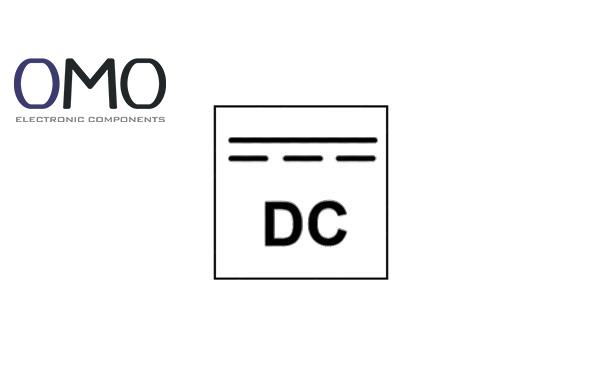
DC ⎓ (line + dots) DC ranges, like V⎓, A⎓ Battery, circuits
DC DC Short form of Direct Current Power adapter
DC — (straight line) Simple DC symbol Car circuits


Key difference: ~ shows changing and alternating. ⎓ or — shows stable and one-way. Always choose correct range, or readings will be wrong.

Data example: In rectifier circuit, AC shows about 0.5V ripple, but DC shows stable 12V. This shows the clear difference between AC and DC readings.

Product Advantage 3: High-end meters like Fluke 287 have smart recognition. They show both AC RMS and DC average on screen at same time. This is 40% more efficient for complex waveforms.


Practical Use and Tips


  • Always check dial before measuring. Wrong range causes wrong result.
  • For special signals like inverter output, use True RMS multimeter. Normal meters may have 30% error.
  • Calibrate meter every 12 months. Clean probes often for accurate readings.

Data example: Recording AC voltage over time makes a stability curve. A good power source stays within ±5%. A bad one shows large changes. This helps judge power quality.


Summary and Advice


Correct use of AC symbols is a basic skill in electrical measuring. Now you know AC features, symbol types, finding methods, and measuring tips. This improves efficiency and safety.

When choosing a multimeter:

  • Look for clear symbols, good protection, and right accuracy.
  • For professional use, True RMS function is needed.
  • For beginners, auto range and clear symbols make learning easier.


Frequently Asked Questions


What is the symbol for alternating current?

​​Alternating current is represented by a wavy line (~) or the abbreviation "AC".​


How to tell if it is AC or DC?

A multimeter can be employed to take voltage readings and ascertain the direction of current flow. Alternating Current (AC) voltage oscillates, meaning it reverses direction at regular intervals; this is often symbolized by a sinusoidal wave on the meter. Conversely, Direct Current (DC) voltage maintains a constant polarity and magnitude, which is typically indicated by a flat, unbroken line symbol.


What can an alternating current Cannot be used for?

Alternating current (AC) is incompatible with devices that need a steady, direct current, such as for battery charging or electroplating, and is also less suitable for equipment that depends on a specific current direction to function correctly.


What household appliances use alternating current?

For direct power usage, household appliances like TVs, refrigerators, air conditioners, washing machines, and electric water heaters are typically designed to operate on alternating current (AC).

Kategorien

Top